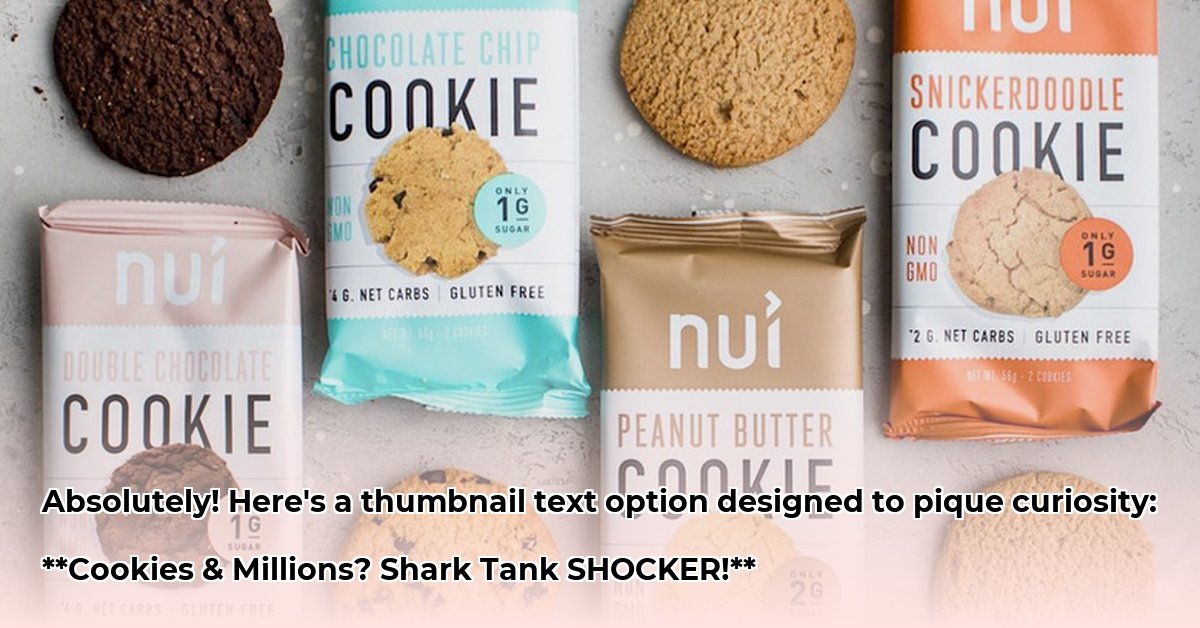
Ever wondered what happened to those tasty keto cookies from Nui after their Shark Tank debut? Many are searching for the inside scoop on their net worth, wondering if Forbes ever took notice of the brand. Let's clear things up by diving into the Nui Cookies story, from their moment in the spotlight to what ultimately happened with the company. Did they hit the big time and land on Forbes' radar? We'll check the facts, compare their numbers to other similar companies, and try to figure out why things didn't quite pan out. It's a common story for businesses that get a boost from shows like Shark Tank, and there are some valuable lessons to be learned. For more Shark Tank insights, explore Jiggy's Nui Cookies analysis.
Nui Cookies Net Worth Forbes: Did Keto Dreams Crumble?
The keto diet craze fueled the rise of many companies, and Nui Cookies was among them. They secured a deal on Shark Tank, and for a while, it looked like they were on their way to building a cookie empire. So, did Nui Cookies ever reach a level worthy of a nui cookies net worth Forbes feature? The short answer is no. While the company generated buzz and excitement, it ultimately closed its doors. Let's examine the Nui Cookies story, from their appearance on Shark Tank to their eventual shutdown, and try to understand what happened in the competitive food industry.
The Shark Tank Bump and Beyond
Landing a deal on Shark Tank can be a massive boost for any business, giving them a chance to achieve substantial brand awareness. Millions of people tune in to watch the show, and the exposure alone can send website traffic and sales skyrocketing. Nui Cookies experienced this "Shark Tank Effect" firsthand. They walked away with an offer from Alex Rodriguez, which was supposed to inject capital and expertise into the fast-growing company. The company hoped to achieve sustained financial health, but they struggled to maintain a competitive edge.
But a Shark Tank deal is just the beginning. Sustaining that initial surge of popularity and converting it into long-term, sustainable growth is a different challenge to overcome. Many companies struggle to handle the increased demand and operational complexities that come with instant fame. It's a make-or-break moment, and unfortunately, Nui Cookies didn't quite make it, creating challenges for investors and consumers alike. What scalable manufacturing processes could have helped the company?
Unraveling the Net Worth Mystery
Now, about that net worth – the reason you're likely here. You might see different numbers floating around the internet regarding their potential financial assets. Some sources, like Shark Tank Insights, estimate their net worth at around $1.77 million. Others, such as Moonchildren Films, suggest it could have been over $10 million. Talk about a huge discrepancy!
So, what's the real story regarding tangible and intangible assets? Well, it's difficult to say for sure. Net worth estimations can be tricky, especially for private companies. Different valuation methods can produce wildly different results. Some estimates might include intangible assets like brand value or intellectual property, while others focus solely on tangible assets like cash and inventory. Also, fluctuations in the cost of ingredients, particularly specialty ingredients needed for keto-friendly products, could have dramatically impacted their finances. It's a puzzle with multiple missing pieces. What specific valuation strategies are most reliable in the niche market of keto-friendly foods?
The Downfall: What Happened to Nui Cookies?
Despite the initial excitement and the Shark Tank connection, Nui Cookies eventually ceased operations. Their website is inactive, and their social media accounts haven't been updated in years. This begs the question: What went wrong in terms of long-term sustainability?
One of the biggest challenges for any rapidly growing food company is scalability. Can they produce enough product to meet the demand? Can they maintain quality as production increases? For Nui Cookies, it seems that scaling production proved to be a major hurdle. Meeting the increased demand after the Shark Tank appearance likely strained their resources and exposed weaknesses in their supply chain.
Perhaps they struggled to find reliable suppliers for their specialized ingredients, or maybe they lacked the infrastructure to efficiently manufacture and distribute their cookies on a large scale. It's also possible that they faced challenges in managing costs and maintaining profitability as they scaled up. Partnering with an established manufacturer or distributor might have helped them overcome these hurdles, but for whatever reason, that didn't happen. What strategic partnerships could have aided Nui Cookies in overcoming their operational challenges?
The Upshot: Lessons from a Keto Cookie Company
The rise and fall of Nui Cookies offers some important lessons for aspiring entrepreneurs, particularly those in the food and beverage industry:
- Do Your Homework: Before seeking funding or appearing on Shark Tank, thoroughly research your production costs and scalability. Make sure you have a solid plan for meeting increased demand and achieving production optimization.
- Plan for the Unexpected: Develop contingency plans for handling supply chain disruptions, fluctuating ingredient costs, and other unforeseen challenges. What risk management strategies should startups adopt?
- Build a Strong Brand: Create a brand that is resilient and adaptable. Consider diversifying your product line or exploring strategic acquisitions to weather market changes and maintain a competitive market share. Stay ahead of emerging diet trends.
Actionable Guidance: A Table for Moving Forward
| Stakeholders | Short-Term (0-1 Year) | Long-Term (3-5 Years) |
|---|---|---|
| Food & Bev Startups | Rigorously assess production costs and scalability before pursuing Shark Tank exposure. Implement contingency plans to manage increased demand and explore partnership opportunities to address potential supply chain constraints. | Cultivate brand durability by diversifying product lines or pursuing strategic acquisitions. Track evolving diet trends (e.g., Keto, low-carb diet options) and modify product offerings to remain competitive and maintain a brand reputation. |
| Investors | Perform comprehensive due diligence on the startup's scalability and long-term financial sustainability, with specific attention to variable ingredient costs. Evaluate the management team's expertise in scaling operations and their ability to address potential issues. | Evaluate the company's long-term innovation strategy and capability to adapt to evolving consumer preferences. Diversify investment portfolios across multiple food and beverage ventures to reduce potential risks and provide investment security. |
| Keto Consumers | Examine ingredient sourcing and manufacturing procedures of low-carb alternatives. Prioritize support for companies that demonstrate transparency in their supply chains. | Promote the adoption of clearer labeling practices for nutritional information and allergen details. Advocate for brands that invest in sustainable and affordable options for long-term dietary success. |
A Final Thought on Keto Cookies
While Nui Cookies didn't achieve the kind of financial success that warrants a nui cookies net worth Forbes article, their story is still relevant. It highlights the challenges and complexities of the food industry, especially for companies operating in niche markets. The founders have since moved on to other ventures, using the lessons they learned from Nui Cookies to guide their future endeavors. Their experience serves as a reminder that success is not always guaranteed, but learning from both triumphs and failures is essential for any entrepreneur and allows for business growth. What strategies can entrepreneurs employ to navigate the challenges of the competitive food industry landscape?
Why Nui Cookies Failed: From Shark Tank to Shuttered
Key Takeaways:
- Nui Cookies, a keto-friendly cookie company, gained initial traction after appearing on Shark Tank and securing an investment, improving brand visibility.
- Despite early success, the company ultimately ceased operations due to challenges in scaling, profitability, and adapting to the competitive landscape. What market dynamics contributed to Nui Cookies' inability to adapt?
- The founders have since pursued individual ventures, applying their entrepreneurial experience to new opportunities, showcasing entrepreneurial resilience.
Did you ever wonder what happens to those companies after they swim with the Sharks and experience potential financial success? Nui Cookies, a keto-friendly treat company, made a splash on Shark Tank, securing a deal with Alex Rodriguez. But the story doesn't end there. Let's dive into why did nui cookies fail, and what became of the founders and their future business ventures.
Shark Tank Dreams and Keto Schemes
Nui Cookies, spearheaded by Kristoffer Quiaoit and Victor Macias, snagged $300,000 for 25% equity, valuing the company at $1.2 million. This happened during Season 10 of Shark Tank and gave them venture capital. Their goal? To ramp up production, making it a scalable production. They were already making waves with over $1 million in sales through their website, particularly among keto dieters, creating a market niche. But can online buzz translate to long-term success in the competitive business world?
The company's cookies, boasting non-GMO (genetically modified organism) ingredients and only one gram of sugar per serving, came with a hefty price tag of $30 per pack (plus shipping). This raised questions about accessibility to customers. Was it a sustainable model, or was it just a short term strategy that would fail?
From Sweet Start to Sour Ending
Despite the initial excitement and Shark Tank bump, Nui Cookies closed its doors in 2020 and shut down operations. The product vanished from the market and was no longer accessible to consumers. What happened? The food industry is a tough nut to crack and can be difficult to